What is 'Premium Travel'?

James Lewis • August 30, 2026

Share this article

Why it's not what you think

When we’re asked to summarise what kind of travel we do best, we tend to lean heavily on the phrase ‘premium adventure. The ‘adventure’ bit is really the main thing, but it kind of doesn’t mean anything by itself (it’skind of like saying we sell holidays. Duh, but what kind??).  

So we put the word ‘premium’ in there to clarify things. By all accounts, an abject failure; the word ‘premium’ is just as nebulous as the word ‘adventure’! While it feels much closer to the mark than the word ‘luxury’, it still leaves plenty of room for interpretation! 


Premium travel (at least as we see it!) isn’t necessarily a rarefied thing; it’s not the preserve of the elite or the super-wealthy. 


What makes travel premium is the experience. Okay, what does that mean?? As James bemoans every time he sees travel companies marketing “experiential travel” – it’s all experience! Unless you’re unconscious, you’re having an experience. So we’ve got some more explaining to do. 


What makes a premium experience? 


In our view, what makes an experience premium is how much of a mark it leaves – in the moment and afterwards. How much it resonates with you in the moment, and how special the memory is in retrospect. 


When it comes to travel, a premium experience is a meaningful one. So it follows that a premium adventure is one that should provide you with more meaningful experiences. Then what is a meaningful experience?? 


Meaningful experiences have one or more of these qualities: 

  1. They’re personalised: they’ve been created explicitly for you and designed around your preferences, goals, values and 
  2. They’re unique: A premium travel experience is not one you should be able to do at home. Whether a one-of-a-kind landscape, a bucket list activity or a rare insight into another culture - they’re very much out of the ordinary. 
  3. They’re purposeful: this doesn’t necessarily mean saving the planet (although it very much can if that’s your jam). This can look like quality time to connect with family, learning about another culture or deeply recharging body and mind – they connect you to something that matters to you. 
  4. They’re rich: Deeply engaging, premium experiences are sensorily-rich in a way that fosters mindful immersion with the world. 


A great indicator of this is just how much an experience takes you out of your own head. It’s tough to think about what’s going on at work when you’re white water rafting down plunging falls, exploring Angkor Wat or staring rapt at the play fighting of lion cubs. 


Interestingly, material conditions (things like whether the taps are gold or the floor is marble) have reliably shown to have very little impact on the enjoyment and satisfaction you tend to get from something. 


All this points towards the premium travel experience looking quite different to what we’d normally think of us ‘luxury’ or ‘premium’. It’s more about richness of experience that richness of wallet! 


How you feel 


For us, the experience itself is just the first step in building a premium adventure. The feelings and emotions the experience creates are what we’re really aiming at. Surfing in California is an objectively novel and cool thing to do, but it’s much nicer for the person who feels thrilled doing it as opposed to terrified. 


So, how do you want to feel? Knowing this is the beginning of creating a premium travel experience. 


The usual suspects are awe, connected, revitalised, content and curious. 


  • Awe frequently tops the list of emotions that travellers want to feel. Awe – and its closer siblings, wonder and delight – are the result of being totally immersed in something vast, novel and beautiful. 
  • Connectedness can be quality time with the family, feeling at one with nature or connected to cultures different from your own. 
  • Feeling revitalised encompasses a deep physical and mental sense of relaxation and rest, combined with a fresh sense of energy. 
  • Contentment is a feeling of satisfaction and peace; the sense that nothing needs to be different from the way it is right now. 
  • Curiosity is the sort of experience that accompanies the broadening of your horizons as you experience something – whether natural or human – that expands your understanding of the world. 

What separates premium travel from other forms of travel is the duration and intensity of these feelings. A premium experience is one that takes you into the deeper waters of awecontentmentconnectedness, curiosity and revitalisation - or anything else you’re looking to feel while away. 


But, this isn’t the end of the line either. As what you’ll want to feel, as well as what will make you feel it, is personal to you. 


So what determines how an experience will make you feel? How it’s filtered through the psychological coagulate that constitutes you


It’s personal 


Here’s where we get psychological. 


For an experience to really tick all of the ‘meaning’ boxes, it needs to go one step beyond being satisfying and even fulfilling in the moment. The most meaningful experiences are ones that make you feel wholly alignedwith the person you want to be. This means values. 


For example, care is a really strong value of ours. So we find the most fulfilment, satisfaction and meaning in travel that allows us to live that in as many ways as possible. This could be volunteering to conduct wildlife research while on safari, working at a spay & neuter clinic or even simply showing our interest in local cultures and traditions. Ideally all of the above. Dovetailing travel and care is what takes it from “just a holiday” to something more special. 


This is something that’s very individual. You may well read the previous paragraph and think that it all sounds far too much like work! And there’s nothing wrong with that. A core value of being active might lead you towards a ski trip or a holiday in the mountains instead. 

We’ve all got multiple values, and they all interact with each other. So choosing a trip style that hits as many of those values as possible is going to ratchet up how meaningful the trip feels for you. 


This touches on how travel can also be a tool for personal & psychological growth. If you want to become more curious, adventurous or anything else – choosing a trip that feeds that particular quality is a great way to strengthen it in yourself. 


----------- 


This seems like a lot to think about, and it is! There’s a real art to weighing up each of these considerations and integrating it all; all this stuff knits together, making finding the perfect trip much like threading a needle. That’s the part that makes it ‘premium’ – it’s easier not to do this kind of thinking, and so it’s not particularly common. 

Fortunately, this kind of thing is what we do best. 


Recent Posts

By James June 21, 2026
You may well have noticed that we don't typically promote a lot of holiday offers or 'deals'. This is a conscious choice we've made
By James June 21, 2026
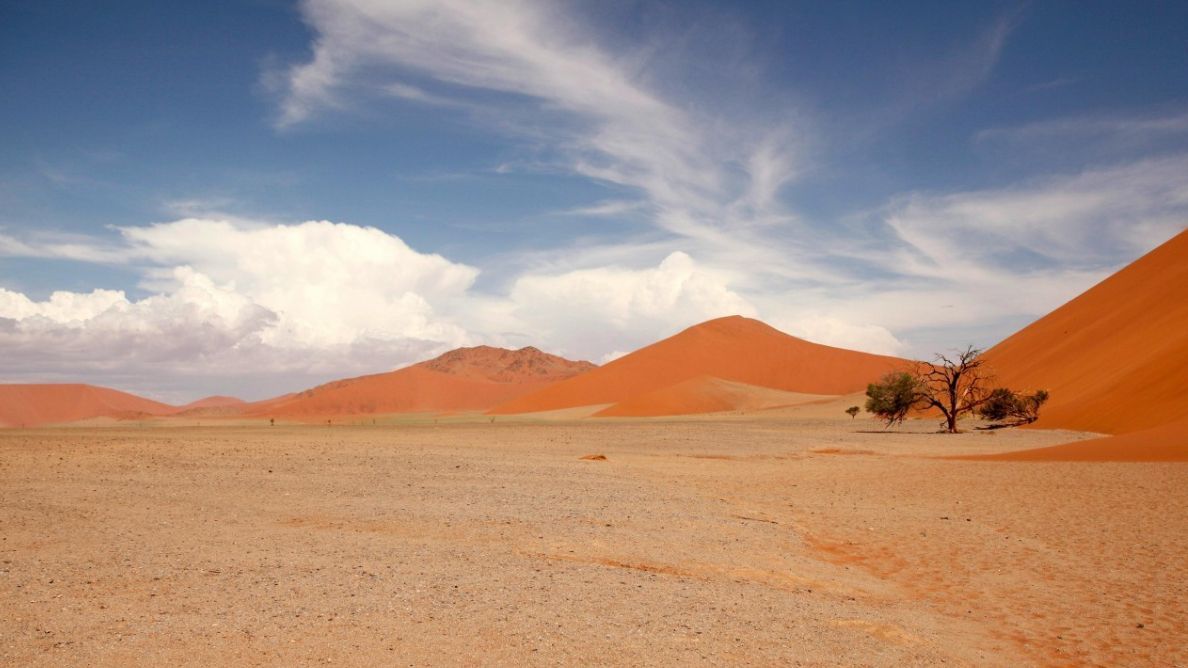
Many of us have things that come to mind when someone mentions Africa. Lions, elephants, zebra, giraffe; all participating in the circle of savannah life. Wide open plains stretching out to distant hills flecked with trees. Or perhaps even the bustling chaos of Johannesburg or Nairobi. What most people don’t picture, however, is Namibia. It wasn’t long ago that most people didn’t even know where “Nambia” was; let alone considered travelling there. My biggest reflection on returning from this spectacular country - aside from the beauty and diversity of its landscapes, flora and fauna - is genuine dismay at why Namibia isn’t the #1 most-travelled-to destination in Africa. The landscapes are increasingly well-known, and speak for themselves. Everything here is vast in a way that evokes awe. The plains stretch on forever, careering into the endless sky whos innumerable stars mirror the countless small plants that make their home in the desert ground. Atlantic swells extend their foamy frontiers to the feet of towering hills of sand that glow in the sunrise - a band of bright orange set between the striking blues of sea and sky. The diversity of Namibia is staggering. One minute you’re the only humans in sight in the midst of the desert; the next you’re in a coastal town that would be totally at home in Southern California. The rolling green of petrified sand dunes transitions sharply to featureless desert in the blink of an eye, before morphing again through scrubby savannah into lush green before reaching the tropical forests and wetlands of Caprivi. In contrast to the landscapes, the safari is perennially under-rated. Both the frequency and diversity of game around Etosha National Park rivals what you’d get in Kruger or the Masai Mara. In our 2 brief days there, I counted over 20 species of animals in the quiet of Ongava Reserve. In the background to all of this - unnoticed until pointed out - is just how clean, safe and stable Namibia is. Streets, especially in areas like Swakopmund, are exceptionally clean and well-maintained. Crime rates are low across the country. Locals repeatedly and proudly highlight the progress being made by the current government to eradicate corruption, improve education and strengthen the economy; progress that one of our parties would do well to achieve in a decade. In a way, Namibia is the perfect blend of everything and nothing. It has it all - great safari, rich history, good infrastructure, safety from crime & disease and every landscape that exists under the (endless) sun. And yet the majority of it is entirely untouched - wide and wild land without the instability that afflicts neighbouring countries on the continent. All with an absence of things that might make a first-timer to Africa nervous: crime, disease and political instability. Especially for families and those visiting Africa for the first time, Namibia really is the perfect way to experience the very best of the continent. In the open midst of its vast nothing, you’ll find everything you’re looking for.
By James June 21, 2026
The question of why we travel is one that I've kept returning to over the past couple of months. I've been reflecting on why we travel, the experiences we seek, the feelings we want to evoke and, crucially, how we often get in our own way. And the more I've thought about it, the more philosophical it's gotten. Enjoy this trip into the deep waters of travel philosophy. As I've thought deeper and listened longer, two words in particular have come up again and again. Awe and wonder. What is it that generates those sumptuous, sweet feelings of awe, wonder and delight in us when we travel? And how we can thoughtfully craft adventures that optimise for awe? To work this out I've trekked across fields - across the fields of psychology and philosophy. I've spoken to both travellers and people who work in travel. And I've tried to decipher what it is that makes travel feeling meaningful and awe-inspiring. This kind of hyperbole is far too overused, but in this case it's genuinely true: I've changed the way I think about travel. What makes a meaningful trip? Nobel-prize winning psychologist Daniel Kahneman distinguished between our 'experiencing self' (there in the moment) and the 'remembering self' (the one who makes sense of what we experienced and creates a story around it). Our brains need time to create meaningful memories. So the way to create a truly unforgettable trip often isn't to cram more in. It's to slow down and allow in the awe & wonder that flood in naturally when you take the time to fully absorb where you are. Travel, in fact, is far more like music than it is a journey. With a journey, the point is to get somewhere; from A to B. You have a purpose that you're trying to fulfil. Like a commute to work or a journey to the doctor's. Your aim is to get where you're going. Travel - real, meaningful travel - much more closely resembles music. The point of music isn't to get to the end. Otherwise the best and most popular songs would be those with only one note! Music doesn't really have a point. There's no point in music beyond simply the enjoyment of the music itself. And this mindset shift helps to unlock more awe in our travel. Paradoxically then, purposeful travel bankrupts itself by keeping you fixated on the next thing; the next sight, the next city, the next thing to tick off. And in all that hurrying around you miss everything. Pointless travel, or slow travel, in having no explicit purpose, overlooks nothing. And thus immerses you fully in where you are. Slow travel When travel becomes less about ticking things off and more about experiencing fewer things more deeply, that's when we prime ourselves for awe. This means going deep rather than broad - spending more time in fewer places. Looking closely instead of whizzing by on your way to somewhere else. Not only is this more meaningful, it's much more relaxing! After all, the last thing you want to spend your precious travel time doing is, well, travelling. You actually get time to take a breath, settle and unwind instead of racing from one place to the next. You might even return without needing to say "I need a holiday to recover from my holiday!" So what? So far, so philosophical. What do I do with this information? Practically, there are useful ways to slow things down and give you the time and space to really savour a place: On your next trip, commit to seeing fewer places; instead spending longer getting under the skin of where you stay Opt for an expansive itinerary that provides unscheduled, free time. These are the moments when you let your curiosity take you! Engage with local culture & people; ask questions! Spend time in nature - the wilder the better! It turns out the route to more purposeful travel is to make it a bit more pointless.