The largest and most populous island in The Azores archipelago, São Miguel can be a holiday by itself. Tucked between the folds of its hills are a treasure trove of secluded waterfalls, dense jungle and sheltered coves.
The art of a good travel itinerary is threading the needle between 'making the most of' and 'getting the best of'.
We recommend hiring a car for a trip to The Azores. With many of the best sites being well off the main roads, relying on public transport will be extremely limiting.
Days 1-4: the central hub
By the time you've landed at Ponta Delgada airport, you'll have had your first hint at what the next 10 days has in store.
The descent from the air reveals rolling waves of green on one side, and a serene sheet of blue on the other. With the patchwork of green rising into craggy peaks, it almost looks like you've landed in the Highlands of Scotland. The blast of heat as you step from the plane cuts through any momentary thoughts of kilts and haggis.
We recommend beginning your island odyssey in the city; a short drive from the airport.
Perched on the central-southern coast of São Miguel, Ponta Delgada - meaning "thin cape" - is the capital city of the Azores. With a population shy of 70,000, it's about the size of Inverness. Amid the city's colourful streets you'll find museums, cafes and shops aplenty. While Ponta Delgada has a handful of hotels, the volume of local restaurants and supermarkets make self-catering here a great option.
Day 1
After grabbing your car and jettisoning luggage, you'll be ready to explore.
Orient yourself with a stroll through the city's narrow streets - a maze of cobblestone fringed with colourful stucco facades - before grabbing a drink and some shade at the Jardim Botânico António Borges. Like a surprising majority of attractions on the island, entry is free. Perch yourself in the arms of the park's tropical fauna and watch the resident chickens strut amidst crowds of ducks.
Make time too for a trip to our favourite pineapple plantation on the island - Plantação de Ananás dos Açores. Despite being smaller and less-famous than Plantação Ananases A Arruda, it's well worth a visit. It's walking-distance from town, and the on-site cafe also boasts the best pineapple ice cream we found across the island!
End the day with a stroll along the sea front to watch the sunset, sampling some local fish before calling it a night.
Day 2
After listening to the hum of the city as it comes to life, grab yourself a punchy Azorean coffee and get exploring.
Your first full morning in Ponta Delgada is a great time to get to know your new home. Museu Carlos Machado was the convent of Santa Andre before Carlos Machado transformed it into an ethnographic museum in 1943. The ground floor is dedicated to 19th and 20th century Azorean life; the upper floors house displays of Azorean art, religious artifacts, coinage, textiles and interesting geological finds dating back to the original settlement of the island in the 15th century.
Along the harbourside, there's a small military museum whose old guns and military equipment kids will particularly enjoy. Those artistically-inclined are well catered for in Ponta Delgada, too. Head to the
INFORMAL Gallery to see work by local Azorean artists or drink in owner Anne's paper-based works of art at
Papel Da Lua.
Whale Watching
Whale watching is undoubtedly one of the Azores' must-do activities. Take the opportunity to hit the clear Atlantic waves this afternoon, and keep your camera at the ready! Trips take anywhere between 3 and 5 hours, depending on how far you need to go to find animals.
A dazzling diversity of marine life can be found off the coast of Sao Miguel, including a wide variety of cetaceans. Keep your eyes peeled for sperm whales - these icons of the Azores spend a good chunk of time down in the depths. Combined with the fact they look like big rocks when above-water, this makes getting a sighting of these giants no mean feat!
That said, we did 2 trips on our visit to Sao Miguel and saw sperm whales both times. On the second time we even saw them in their iconic 'standing' posture! Across both trips, we ended up seeing 3 types of whale and 4 types of dolphin - so there's a lot to see here!
Our absolute favourites are the dolphins, though. Watching a pod of dolphins leaping out of the water and playfully racing your boat is among the most wholesomely-joyful sights we've seen!
If you're visiting in April or early-May, keep your eyes peeled for planet Earth's largest creature - the Blue Whale. These behemoths come to feast on springtime plankton blooms before resuming their great trek to the Arctic. Reaching up to 24 metres long and with tongues that weigh more than an elephant (!!), seeing one of these gentle giants in the wild is a profoundly humbling experience.
Head into town to grab a local bite to eat before crashing out. For recommendations, check out our favourite places to eat in Sao Miguel.
Day 3
It's time to adventure! Use today to escape the city and embark on a day on Sao Miguel's rugged west.
Sete Cidades
The centrepiece of the island's western side is the famous
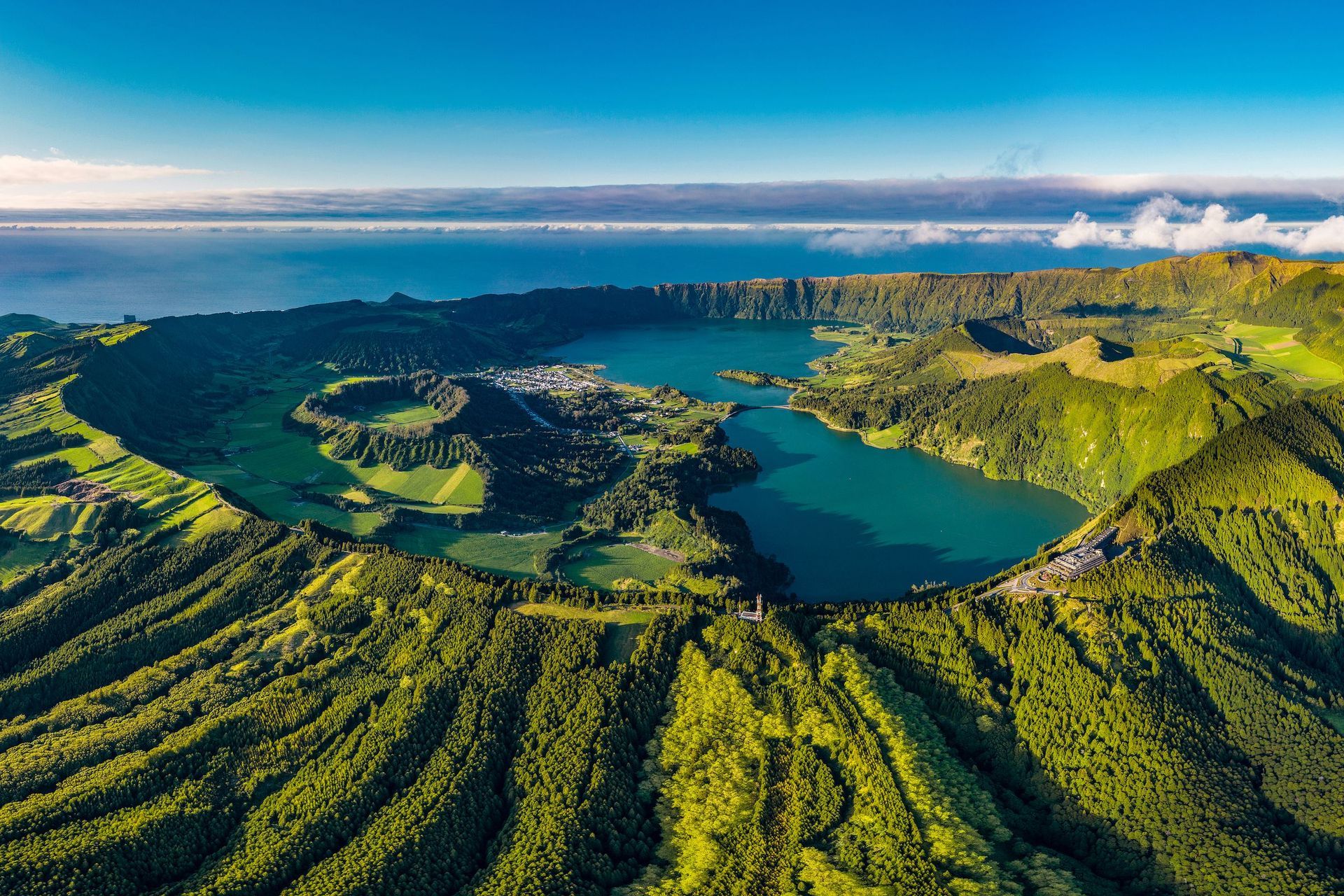
Sete Cidades. Crowned by the towering ridges of the caldera and studded with pastel-hued hydrangeas, these glittering blue and green lakes are one of the most captivating views in the Azores. Separated only by a narrow bridge and surrounded by dense forest, the entire area seems to beckon you into the realm of fairy story.
And it is. The famous colour difference is the stuff of Azorean legend. A shepherd boy and a princess met at the lake's edge and fell in love, but were forbidden from meeting again. Their final farewell produced tears: her blue eyes gave color to Lagoa Azul, his green eyes to Lagoa Verde. The actual explanation is more prosaic — different depths, suspended algae, and the angle of reflected light.
The journey from Ponta Delgada is a fairly short one, taking around 25 minutes via the EN9-1A road. However, in reality you'll find it taking much longer, as you stop every few minutes to gaze at the ever-widening panoramas as the road ascends.
Be sure to stop at the Miradouro da Grota do Inferno on your way up the mountainside. The walk up takes you gently through scenic forest before steepening sharply. The climb is short, though, and well worth it. Your reward is an unmatched panorama over the lakes.
The primary viewpoint is the Miradouro da Vista do Rei. It's impossible to miss, with the crumbling carcass of the abandoned Monte Palace hotel brooding forbiddingly on the hillside. Built as recently as the early 1990s, its present state of dereliction offers a poetic contrast to the enduring majesty of nature's architecture it sits alongside. It's actually possible to go inside the gutted remains, and even to climb to the roof! Be warned: it's pretty eerie, but the views from the top are worth the ascent up through the wrack and ruin.
Whether from the hotel roof or the main viewpoint, soak up the view of these jewels in the crown of Sao Miguel. Descend the other side of the ridge and pass through the wall of hydrangeas at the bottom before threading your way between the lakes into the village of Sete Cidades.
Sete Cidades is a charming, small village with a population of approximately 700 people. There's not much going on, which gives it a lovely, relaxed vibe. We highly, highly recommend a pitstop at
Carioca Breezy - a gorgeous community-run garden-lounge serving refreshing acai from a food truck. This is the perfect place to laze after the morning's hiking, shielded from the heat of the day by the shade of the garden's abundant foliage. Fred - the owner - is a ray of Azorean sunshine, having traded the stress of life in the art world for slowness, simplicity and joy in Sete Cidades.
From the village you can also rent kayaks to take out onto the lakes themselves, which is great fun.
The West Coast
If you can make the tide times line up, make sure to visit Ponta da Ferraria too. This natural thermal pool is tucked into the shore itself, in a pool of basalt rock. Here, geothermal spring water mixes with the raw Atlantic ocean, creating a unique and all-natural spa.
As afternoon rolls slowly into evening, we recommend heading into the village of
Mosteiros on the west coast. This is the place for watching the sun dip behind the blue rim of the Atlantic. On a clear day, the pastel hues of pink, orange and blue are like a Monet painting.
Something to bear in mind: driving in the dark can be quite tricky here. As temperatures cool, the clouds lower, making visibility deteriorate rapidly. Combined with a lack of lighting, this can make driving conditions quite challenging. We learned this one the hard way! So, especially if this is your first time driving on the right-hand side, beat a retreat from Mosteiros before the sun goes down.
Day 4
Having seen the headline act yesterday, day 4 is an ideal time to head off the beaten track. We booked a local-guided tour of Sao Miguel's hidden gems, and highly recommend it.
The North-East's Hidden Gems
Doing a locally-guided tour is a nice change of pace from going under your own steam, and gives you the opportunity to connect with those who know the island intimately. You also get those flourishes of local colour that give a place character. Before our tour, I'd have driven through San Roque without even noticing it. After, I can still picture the street there where our chatty guide - Catia - grew up.
Our trip took us to the other side of the island; to Nordeste. As the name hints it, this is the north-easternmost part of Sao Miguel. We learned from Catia that
Nordeste used to be thought of as Sao Miguel's "second island". My mind immediately pictured volcanic tumult that over eons joined up the two islands, but the reality is much more prosaic. Before the new highway that encircles Sao Miguel was built, it took 2-hours to get to Nordeste from Ponta Delgada. This was an intolerably long drive for locals who can get most places in 20 minutes, so they basically never bothered going there. Hence, it might as well be a second island!
Fortunately, with the drive time slashed to a mere 1-hour, we could experience the region that - as well as the second island - is also known to be Sao Miguel's "cleanest and greenest".
Nordeste certainly lives up to this billing, with vast tracts of tropical rainforest that hides many a secret waterfall. We visited a bunch and, except for two intrepid Azorean influencers, were always the only ones there.
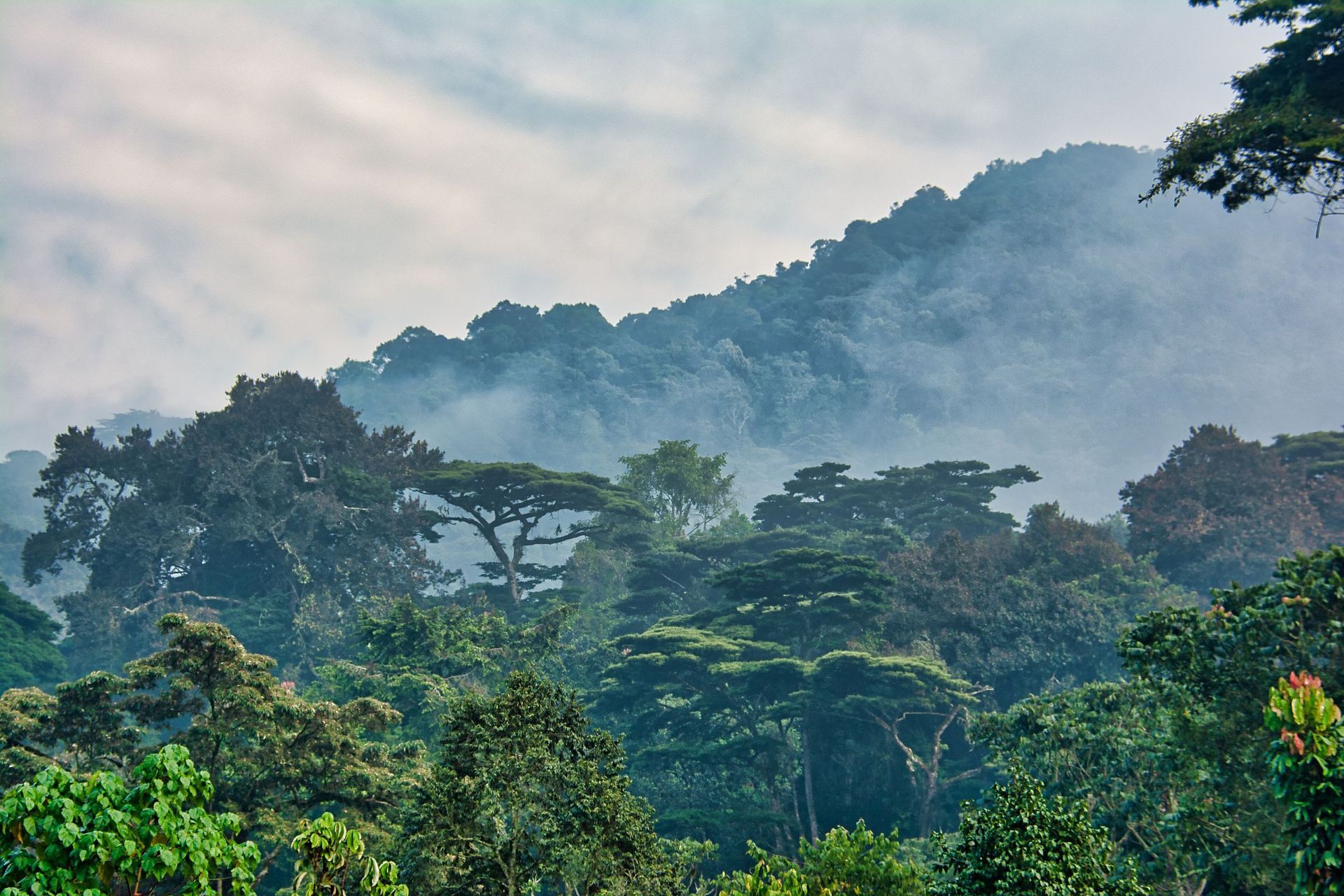
Other highlights included forest-bathing amongst endemic Azorean woodland; threading through fractals of branches and flowers in a rainbow of hues. Climbing into the cloud forest (yep, they have one here!) along a narrow ridge as the mist descended was so worth it for the exceptional views back over the island.
The other great thing about travelling with a local guide is local restaurant recommendations! Nestled in the quiet streets of a coastal village, we filled ourselves with fresh Azorean fish in a local taverna. Dessert wasn't quite as 'authentic' - a Toblerone tart - but just as delicious!
Days 5-8: into the heartlands
Day 5
It's time to leave the city behind and plunge into the heart of Sao Miguel's wild side. Before that, though - a detour. The shimmering waters of
Vila Franco do Campo's islet beckon.
Head east out of Ponta Delgada, driving for half an hour before reaching the town of
Vila Franco do Campo. The narrowing streets offer a dead giveaway that you've reached the town.
Vila Franco Do Campo
Vila Franco do Campo feels the classic small beach town - St Ives versus Ponta Delgada's Truro. Its crescent-shaped beach backs onto a quiet street of charming, old-fashioned buildings, behind which sits the small shops and cafes of the town.
Vila Franco do Campo's main draw, however, isn't in the town itself. In fact, (technically) it's not even part of the same island! Just off the coast sits the islet that draws the attention. Known as the 'Princess Ring', the islet is the remains of a conic volcano that collapsed in on itself amidst ceaseless battering from wind and waves.
Uninhabited, the island is a protected nature reserve for native seabirds. As a result, access is carefully controlled, with a cap on the number of simultaneous visitors. You can also only access the island on an authorised boat transfer, unless you kayak over yourself (which requires a special ticket). Finally, the islet is closed to visitors from 15th April to 14th June each year.
Navigating these conditions is well worth it, though! If you've the strength for the 30-minute crossing, it's fantastic fun to take a kayak over in calm seas. You can also swim and snorkel in the water at the centre of the islet, which is a haven for a huge variety of fish.
If you're in the mood for something a touch less active, you can also join tours run by marine biologists to learn about the islet's formation and ecology.
After the afternoon whiled away in the clear waters of the islet, the forests of
Furnas await.
Furnas sits in the central highlands of Sao Miguel, and you'll notice the change in the landscape as you comb through its winding roads. Trees grow taller, plant life gets denser and wildflowers flourish in steeply-rolling fields. You're heading into the centre of Sao Miguel's geothermal heartlands.
Furnas
The two main sites in Furnas are the town centre and
Lake Furnas. Lake Furnas is a large volcanic crater lake whose pristine expanse of emerald-green reflects the colour of the steep, forested peaks that surround it on three sides. The lake itself is protected, so it's not for swimming. Around its perimeter, though, is a well-kept 11km walking trail. A walk around the lake is an absolute must! But for now, continue on into the town.
Furnas town is both small and packed full of interesting things to see. Here you'll find the geothermal baths of both
Parque Terra Nostra (as well as its impressive garden!) and
Pocas de Dona Beija. The former is larger and busier, the latter less polished but with a loyal following. In the town, you'll also come across various cracks in the street from which volcanic steam billows ominously, especially as you head towards the
fumaroles. Here you'll find spring water emerging in geysers, with temperatures ranging from 15c to a staggering 95c!
There are also several hotels and restaurants of various shapes and sizes. We visited a lovely local spot named
A Quinta - a small restaurant set in a small garden with rustic wood furnishing, friendly, attentive staff and low-key acoustic music in the background.
Day 6
Having rested after a night's sleep, this is the perfect time to get out and explore the lake. The 11km trail tends to take around 5 hours, particularly if you take the highly-recommended detour into
Parque Grena. Despite this, it is a very gentle and accessible walk, particularly outside of Grena.
Lake Furnas
Begin the walk from the southerrnmost car park, heading past the carved wooden wizard on your left. After a short walk along the cobbled path you'll reach the chapel of
Ermida de Nossa Senhora das Vitórias. Behind the chapel sits
Mata Jardim José do Canto - a botanical monument to the passion of José do Canto. The garden costs €5 to enter and boasts over 100 plant species - both endemic and exotic - along a 2km stretch.
As you bend around to the western shore past the pair of Como-esque lakehouses, you'll reach the
Centro de Interpretação Ambiental das Furnas. This modern museum is well worth a visit, housing fascinating and interactive exhibits on the Azores' volcanic origins. You'll also learn about the enduring influence the constant, looming presence of the volcano has on local life in Furnas.
Pit stop at the museum done, it's time to continue the trail. From here on, the trail gets a touch wilder as you edge further into the dense woods of the hills. Take your time to breathe in and enjoy the rich mix of plant life all around you. Every now and then, a gap in the vegetation reveals the shining, still surface of the lake. The way the early sun shines from the east makes these views particularly delightful in the morning!
Eventually, after walking up the long western side under the eaves of the trees, the land widens. Here you'll find the fumaroles steaming and bubbling away like nature's cauldrons, whose sulphuric scent hangs noxious in the air. To this day, the local dish of
Cozido is cooked in these
fumaroles. Look closely and you'll see packages each bearing the name of a local hotel.
Here you'll also find the gateway to
Parque Grena. Entry costs €10, and is worth every cent. This winding woodland trail takes you deep into the dense forest of the lake's northern slope, culminating in Sao Miguel's largest waterfall. The trail is absolutely gorgeous - pure wilderness all the way. Towering Japanese Cedar and Eucalyptus trees flank paths leading inexorably up towards the falls, accented by colourful tropical plants thriving in the park's close humidity.
You'll also find dotted around the park's expanse curiosities like a hobbit house, a small zoo and even a sauna & hot tubs! On the baking September day that we visited, the cool river criss-crossing the hiking trail was the prime attraction; a dip in cold, clear water the perfect refreshment after the steep ascent.
After a couple of hours enjoying the wild trails and spectacular viewpoints of Parque Grena, the final stretch of the walk lies ahead. Passing the stalls selling fresh pineapple and ice cream, the path turns south along the eastern bank of the lake. Unlike the rest of the densely-wooded trail, on this section you're treated to unobstructed views of Lake Furnas' emerald expanse.
Walk finished, a spa session is wholly justified. Book in an evening slot at
Pocas de Dona Beija and enjoy the warm geothermal water under a canopy of stars. And relax!
Day 7
Terra Nostra
After yesterday's walking, today calls for something slightly slower-paced. After a leisurely breakfast, head to
Parque Terra Nostra for a gentle amble around its expansive 12.5 hectare botanical gardens. It's open from 10:30 until 16:30, although guests at the Hotel Terra Nostra get unlimited 24hr asccess. Home to more than 2,000 species of trees, there's plenty to see on a walk around the grounds.
Tree-lined walkways lead you through the park, passing gently flowing streams and lotus-filled pools. The deep shades of green, scent of flowers and sound of water gently flowing all give the park an idyllic, serene quality. Take your time here. There's no rush.
The jewel in Terra Nostra's crown is the large geothermal pool. Here you'll find locals and tourists alike seeking relaxation in its 39c water. Don't let the brown colour put you off - it's not muddy! The colour is a result of the volcanic water's high iron content. So, best to not wear your best swimsuit!
We ate at the hotel restaurant in the evening, and really enjoyed it. It's on the fancy side, although you can still get a hearty, authentic Cozido here. For those of you with a sweet tooth - the dark chocolate mousse may just be the highlight of your entire trip.
Days 8-10: let's go to the beach
Day 8
Leaving the deep green of Furnas behind, it's time to head back to the coast! Fortunately, the drive north is just as picturesque as the drive from the south was. The scenery is bucolic: all twisty roads flanked by wide fields and thick hedgerows. Traffic here consists mostly of tractors and, occassionally, long lines of plodding cows.
Eventually, the wide vista of Sao Miguel's northern coastline opens up before you.
Your destination is
Santa Barbara, a small and achingly-pretty beach sandwiched between the contrasting towns of
Rabo de Peixe and
Ribiera Grande. Before that, though, there are a couple of important stops to make!
Gorreana Tea Plantation
Founded in 1883,
Che Gorreana is the oldest tea plantation in Europe. It's now also the only tea plantation in Europe! Set amidst the ordered lines and iconic, layered banks of tea plants, the plantation is a window into tea-making tradition. Entry here is, again, free. Inside, you can see the tea-making process happening in real time.
The lack of computerisation is striking - heavy machinery moves the tea leaves through the factory line to be sorted by-hand into Gorreana's various varieties. You can also walk through the fields of tea plants themselves, taking in the scent and watching the tea pickers at work.
After a stop at the cafe for tea overlooking the sea, it's time to move on to the next stop: Lago di Fogo. It's a detour away from Santa Barbara, and couldn't be more worth it!
Lago di Fogo
Winding your way up the snaking
EN5-2A, you'll reach a point in the road where you can go no further. A police cordon blocks the way up the mountain during the day (and you wouldn't want to be driving these roads at night!). At the police block, you'll find the car park.
From here, you've got two options. Ascend a weather-worn wooden staircase to reach yet more geothermal baths:
Caldeira Velha.
If you've not yet had your fill of nature's jacuzzi, this is a great one to go to. The setting is strikingly different from Furnas' bathing pools. Unlike those town-surrounded places, here you're drawn into the jungle. Hot springs bubble up under the shady cover of a dense tree canopy, giving these pools a uniquely tropical vibe.
If you've left your swimwear at the bottom of the suitcase, your road leads to the mountaintop. You get there via buses, which run every 30 minutes and cost €5pp. There are two routes: red and green. You'll be getting the red route, which will ferry you up the northern pass of the mountain. The green route takes passengers up and down the southern side of the mountain, so there's no real need to take it.
The red bus stops at a couple of viewpoints on the way up, and different ones on the way down. You're welcome to get out and marvel at the views each time, but make sure you're back in time to leave! You'll soon see why you wouldn't want to come here at night, as the route winds up the zig-zagging hairpins of the mountain roads towards the summit.
After around 25 minutes, you'll be at the top. From the moment you step off the bus, the sweeping vista explodes into view. Rich green fields bend their way up into thick forests before the sudden green cliff of the treeline leaves the craggy face of the mountainside bare. At the margin of the land sit the clustered buildings of
Ribiera Grande and
Rabo de Peixe. Beyond: the glassy Atlantic stretches out towards the distant horizon.
That's not all, though. Right behind the bus stop is a cutback that leads steeply upwards to the crest of the mountain. The path levels out and the ground simply stops. Inside the broken bowl of the crater lies one sheet of blue water. Past the rim, the whole island is laid out in order: the bare grey face of the mountain, a green carpet of trees, the terracotta rooftops of Ribeira Grande, and the Atlantic going inexorably on.
The forbidding peaks of its volcanic towers, dark and ancient. The undulations of its verdant land in bucolic swathes of green. The deep blue of lakes, like ink blots on green canvas, sparkling in the afternoon sunlight. Drink it all in.
Eventually, when you can tear yourself away from the view, grab the bus back down the mountain and set the sat nav for
Santa Barbara.
Santa Barbara
I've purposely left the hotel/accommodation recommendations open in this article. This is about what to do without prescription of where to stay. However, here I'm going to throw all that to the wolves. If you can, the place to stay here is
Santa Barbara Eco Resort (SBER from now on), a natural-yet-modern complex of eco-lodges perched on the cliff overlooking Santa Barbara beach. This is where we stayed on this leg of the island. We've also had several clients stay here - without fail it's one of the first things they rave about.
SBER's eco-first ethos is, naturally, a huge thing for us. The whole complex has been built with sustainabiltiy in mind. Farm-to-table dining, upcycled furnishings and creative energy production keep operations low-impact. The rooms are also gorgeous, the food incredible and the setting perfect. As you can tell, we rather like it!
There are of course other good options along this stretch of north coast, particularly in
Ribiera Grande. For a proper, detailed overview of these, chat to us. For now, though, we'll base this section of the article on staying at SBER.
Having checked in to SBER, it's time to relax. Both now and in general. This final leg of the trip is the time to slow down and relax.
Start as you mean to go on by watching the sun set from the clifftop as sea and sky turn from blue to pink. Oh, and, keep your eyes peeled for dolphins! We saw a pod bouncing their way east in the fading light, leaping and splashing as they went.
Day 9
Whale Watching/Rabo de Peixe
With Sao Miguel's north coast famously being the best place for whale sightings, another whale watching trip is well worth it. Mornings are best for cetacean activity, so grab a quick breakfast and make your way to
Rabo de Peixe.
Rabo de Peixe is the largest fishing village in the Azores. Since the 16th century, fishing has been the beating heart of this north-coast town. To this day, all-things maritime remain central to the people of this village and their way of life. The village was made famous by the Netflix series Turn of the Tide, and, since its release in 2023, Rabo de Peixe has seen tourist numbers increase. However, it still retains an earthy, local feel; sharply contrasted to near-neighbour
Ribiera Grande.
On the morning that we hit the waves, the sky was a sullen blanket of grey. Sea conditions were perfect, though - glassy and calm. Our little zodiac made light work of its gentle lapping, and we were quickly out into the depths.
We soon came upon a pod of Atlantic White-Sided Dolphins. As usual for dolphins, they seemed to be having the time of their lives, chasing each other, racing our boat and leaping out of the water. Dolphins really have to be up there with the most joyful animals around!
The playful dolphins were, though, the starter. A warm up for the main course to come. Our guide spotted a big lump moving around in the distance, which we quickly caught up to: a Bryde's Whale. A species of baleen whale on its migratory route.
The tourist then ran into some natives - a pair of sperm whales. Loitering in their iconic upright posture, we could see their heads sticking up above the water like smooth rocks. What followed was a scene from an Attenborough documentary.
The sperm whales were not at all happy about the intrusion of the Bryde's Whale into their neighbourhood, a message that appeared to get lost in translation. Tails were waved in warning to the delight of all of us watching. The big baleen grew ever-closer to the sperm whales, its constant exhaling like loud sighs of exasperation. Maybe we were anthropomorphising too much, but we felt the tension in the air.
Then, if this weren't enough, two dolphins joined the party! In classic dolphin fashion, they cared not at all about the battle of wills going on in front of them. Jumping and splashing, they first considered harassing the sperm whales. Despite their playful appearance, dolphins actually carry out frequent muggings of sperm whales. They jab the poor whales' stomachs with their breaks to make them vomit, which they then eat. Outrageous!
Cetacean conflict was averted when the Bryde's Whale thought better of it, turning off west. The dolphins decided this looked more exciting, following along in the baleen whale's wake.
Excitement over, it was time for us to return to shore.
Ribiera Grande
After the early start, the afternoon is wide open. Return to SBER to relax by the pool or hit the beach in the afternoon sunshine.
If you've still got energy left in you, have an explore of Ribiera Grande. Rabo de Peixe's closest neighbour has a totally different vibe: classic laid-back surf haven. It's a much bigger town than its neighbour, too. In fact, the second-largest after Ponta Delgada!
You'll find lots of small squares, pretty churches and local shops here. You'll also find
Fábrica de Licores Mulher de Capote, a liqueur factory established in 1993 that offers free and guided tours. For a science fix, head to
Observatório Astronómico de Santana, which offers astronomy exhibits and nighttime viewing.
Alternatively, do as the locals do and hit the waves! Grab some surf lessons at
Monte Verde beach and see what the fuss is all about. After a couple of hours on the waves, head to
Mercado Municipal Da Ribeira Grande to refuel on local food offerings.
Day 10
Santa Barbara
This has been an action-packed adventure - by this point you've been all over Sao Miguel and seen a LOT of dramatic landscapes and local culture .
But ideally you don't want to come back from your holiday so tired that you need another holiday. So, with the homeward-bound flight around the corner, now is the time to relax.
If you're staying at SBER, make the most of their outrageously-tasty food. Lounge lazily by the pool. Watch the waves roll against the shore. Soak up the sun and the sounds of nature around you.
If you can be bothered, grab an açai bowl and your favourite beverage at the beach bar and while away your final evening listening to their live music as the sun sets on your time in the Azores.
Day 11
Well-rested, it's time to pack up and head for home.
Grab breakfast and a final salutary dip in the sea before checking out of SBER and heading back to Ponta Delgada. The drive to the airport is only 20-minutes. There's a
Galp petrol station on the
EN3-1A a couple of minutes after leaving Santa Barbara where you can top up the hire car if you need to.
Now the beginning, in reverse. Transfer. Airport. Flight. This time, looking out across the receding mosaic of green, you no longer see an unfamiliar island. That thread of road is the one to Sete Cidades. Under that cloud, somewhere, is Fred's place. Even the pathless blue on the other side is engraved with cetacean conflict. Ten days ago this was a landscape. Now it's real places you can point to and say "I've been there".